Crisam Logo
  • CRISAM®
    CRISAM®
    • What is CRISAM®?
    • Method
    • Content
    • Customers
    • Academy
    • Webinars
    • Events
  • Areas of application
    Areas of application
    • Information Security Management
    • Integrated Risk Management
    • ESG
    • CRISAM® AI
    • Data Protection Management
    • Audit Management
    • Compliance Management
    • Business Continuity Management
    • Tax Compliance Management System
    • Project Risk Management
    • Legal Register
    • Conflicts of Interest Software
    • CRISAM® Legal Hold Software
  • Industries
    Industries
    • Automotive
    • Energy
    • Manufacturing
    • Financial Services
    • Retail
    • Real Estate & Construction
    • Healthcare
    • Broadcasting & Telecommunications
    • Technology
    • Transport & Logistics
  • More
    More
    • Download Center
    • CRISAM® Academy
    • Webinars
    • News
    • Review CRISAM®
    • Jobs
    • CRISAM® Partners
    • Trust Center
    • Contact
  • en
    • de
    • en-gb
Request
  • Sprache
    • en-gb
    • de
  • CRISAM®
    • What is CRISAM®?
    • Method
    • Content
    • Customers
    • Academy
    • Webinars
    • Events
  • Areas of application
    • Information Security Management
    • Integrated Risk Management
    • ESG
    • CRISAM® AI
    • Data Protection Management
    • Audit Management
    • Compliance Management
    • Business Continuity Management
    • Tax Compliance Management System
    • Project Risk Management
    • Legal Register
    • Conflicts of Interest Software
    • CRISAM® Legal Hold Software
  • Industries
    • Automotive
    • Energy
    • Manufacturing
    • Financial Services
    • Retail
    • Real Estate & Construction
    • Healthcare
    • Broadcasting & Telecommunications
    • Technology
    • Transport & Logistics
  • More
    • Download Center
    • CRISAM® Academy
    • Webinars
    • News
    • Review CRISAM®
    • Jobs
    • CRISAM® Partners
    • Trust Center
    • Contact
  • Request
Home/News/Governing at machine speed

How can you govern a company running at machine speed?

Episode 1 of our series on AI governance and board oversight of AI. Why the board stays accountable for decisions it no longer sees, and seven questions it should be able to answer.

November 2026By Andrew McIntyreReading time approx. 7 minutes
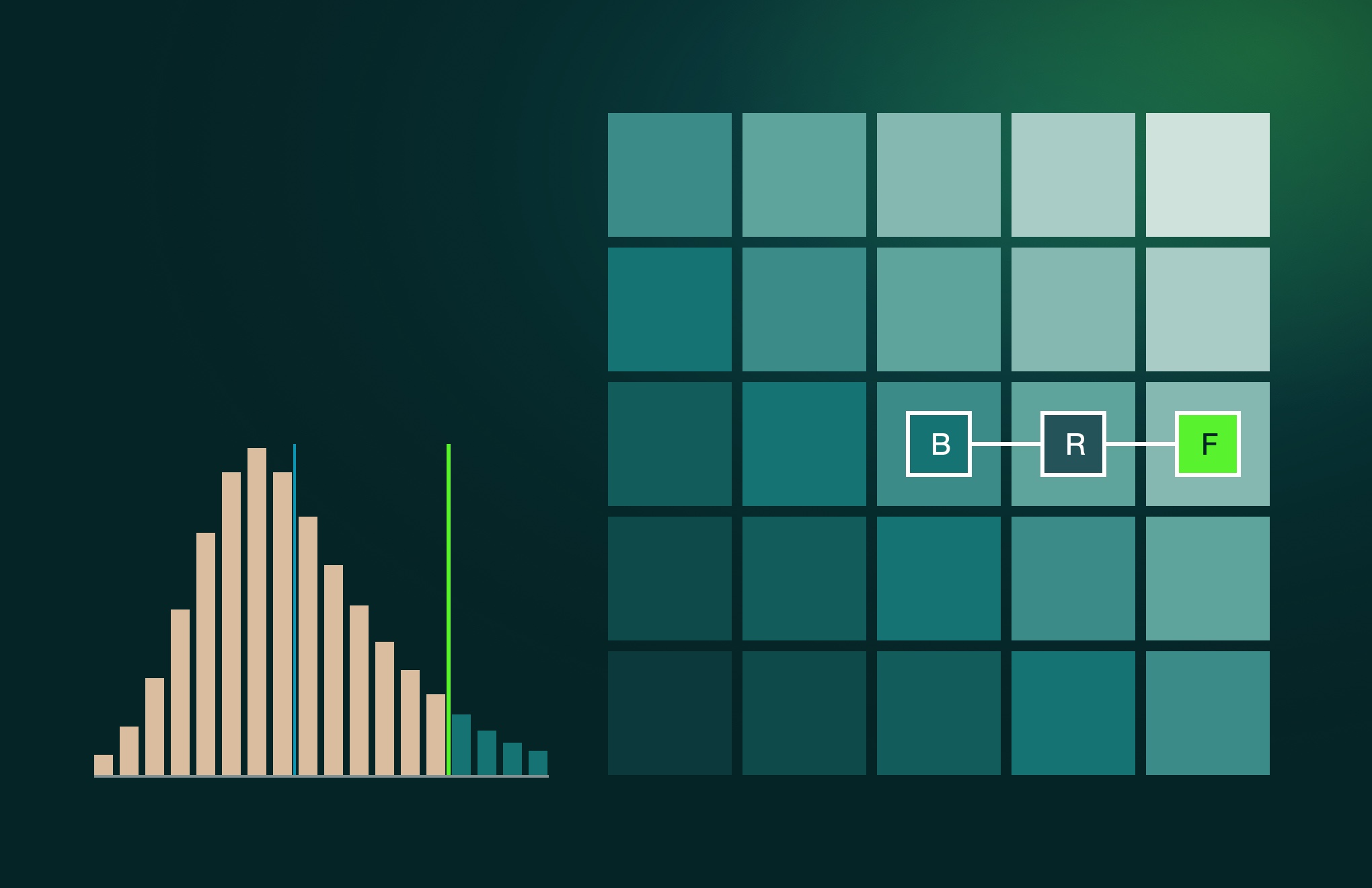
Abstract timeline: a short quarterly risk meeting at 9.00 a.m. while automated decisions continue without pause along the whole day
Contents
  1. The governance gap
  2. Guardrails after the accident
  3. Human in the loop
  4. Are the components connected?
  5. Seven questions for the board
  6. The question left unanswered
  7. FAQ
Share this article LinkedIn
In shortAI systems now change prices, screen candidates, approve transactions and talk to customers while the board meets once a quarter. The board stays accountable for those decisions. Can it still understand, challenge and stop them as they happen? Paper One of the CRISAM® Machine Speed Governance Series by Andrew McIntyre asks that question and sets out seven questions every board should be able to answer. All three papers of the series are available as one download.

At 9.00 a.m. the executive committee begins its quarterly risk meeting. The principal risks have been reviewed, the control assessments collected, the compliance reports prepared. But the company does not wait for the meeting to finish. While executives discuss the business, algorithms are changing prices, screening candidates, approving transactions and talking to customers. The board remains accountable for those decisions. Is it really in control of them?

The governance gap

Traditional corporate governance was designed for a world in which people made decisions, systems recorded them, committees reviewed them and auditors examined them afterwards. AI changes that model. Machines now interpret information, recommend actions and execute decisions continuously, at a scale no committee can supervise manually and at a speed no conventional reporting cycle can match.
How fast the ground is moving
AI capability
The length of cyber tasks AI models complete without human direction doubled roughly every eight months (UK AI Security Institute, December 2025).
Attack speed
A convincing phishing email took a human team about 16 hours. Generative AI produced one in five minutes (IBM X-Force).

Sources: AI Security Institute, Frontier AI Trends Report, IBM X-Force

When a threat can be created in five minutes, can a quarterly control review still be called resilience? When AI capability changes on an eight month cycle, can an annual risk assessment provide meaningful oversight?
Figure 1, the governance gap
Governance gapPeriodic reviewTime
Speed at which the company operates
Speed at which its leaders can understand, challenge and control it

This is the governance gap: the distance between the speed at which a company operates and the speed at which its leaders can understand, challenge and control it.

If answering the board's questions about AI requires several departments, different systems, spreadsheets and weeks of investigation, the organisation may have governance processes. It does not have control at machine speed.

We build the guardrails after the accident

History shows a recurring pattern, and it has five steps:
  1. Technology creates speed, scale and advantage
  2. Adoption accelerates
  3. Existing controls prove inadequate
  4. A serious failure exposes the gap
  5. Only then does governance catch up
The Flash Crash of 6 May 2010 shows what this looks like at machine speed. In about twenty minutes that afternoon, more than 20,000 trades across over 300 securities were executed at prices more than 60 percent away from their values moments before. The response was circuit breakers and price limits: boundaries that act at the same speed as the system they govern.
  • Titanic, 1912
  • Three Mile Island, 1979
  • Piper Alpha, 1988
  • Flash Crash, 2010
Each of these industries learned the same lesson the hard way. Safety did not come from one policy, one control or one responsible person. Paper One traces what failed in all four cases, what changed afterwards, and what each lesson means for AI.

Is a human in the loop really in control?

The instinctive response to AI risk is to insist that a human remains in the loop. That sounds reassuring, but it avoids a more difficult debate. Humans are not perfectly rational. Fatigue, pressure, incentives and cognitive bias influence them. They overlook weak signals, defer to authority and continue with failing courses of action because reversing them would be embarrassing or expensive. AI may already be more accurate than people in narrow tasks. If every output must wait for human approval, the human becomes the bottleneck and the organisation loses the speed and consistency it hoped AI would provide. Yet a person clicking an approval button is not necessarily exercising control. If the reviewer lacks time, expertise, context or authority, human oversight becomes ceremonial. The person absorbs accountability without possessing meaningful control.

So what does a board actually need to retain, if not a human touch on every decision?

The components exist. Are they connected?

Most large organisations can point to the components of governance:
  • Policies
  • Risk registers
  • Control libraries
  • Regulatory databases
  • Audit findings
  • Incident systems
  • Supplier assessments
  • Board reports
The critical question is not whether those components exist. It is whether they are connected closely enough to govern a machine speed enterprise. Five scenarios test that:
  1. ModelIf an AI model changes, can the organisation immediately identify every process, decision, customer obligation and control affected?
  2. SupplierIf a supplier fails, can management see the effect across services, risks, regulations and strategic objectives?
  3. ControlIf a control stops operating, is the failure detected immediately or at the next scheduled assessment?
  4. HarmIf an automated decision causes harm, can the organisation reconstruct the authority, data, logic, evidence and human accountability behind it?
  5. StopIf an executive decides that activity must stop, can the organisation identify and interrupt every connected process?
If the answer depends on teams manually reconciling emails and spreadsheets, the organisation is not seeing risk in real time. It is reconstructing risk after the event.

Seven questions a board should be able to answer

Paper One closes with seven questions a board should be able to answer without commissioning a new investigation each time. The first one:
  1. Do we know where AI is being used, including unauthorised or shadow AI?
Questions 2 to 7The other six are in Paper One, part of the three-paper series.
Get all three papers

The question left unanswered

AI is not waiting for governance to catch up. Employees are adopting it, suppliers are embedding it and competitors are redesigning work around it. Preventing its use is neither realistic nor strategically credible. But accepting machine speed without redesigning governance is equally untenable. A company cannot govern continuous, interconnected technology through periodic, disconnected oversight. It cannot place a human into every machine decision. Nor can it delegate purpose, acceptable risk and accountability to the machine itself.

How do we preserve human authority without reducing the company to human speed?

Paper Two of the series sets out an answer. Episode 2 of this blog series picks up there.
The Machine Speed Governance Series in one download. Paper One sets out the control question, the four lessons from history and all seven board questions. Paper Two answers it with governed autonomy. Paper Three asks how you know you are still in control, with continuous assurance.
Get all three papers

Frequently asked questions

  • Machine speed governance asks how a company stays in control when AI systems interpret information, recommend actions and execute decisions continuously, faster than committees and reporting cycles can review them. It is the question of whether leaders can understand, challenge and stop those decisions as they happen, not only examine them afterwards.
  • The governance gap is the distance between the speed at which a company operates and the speed at which its leaders can understand, challenge and control it. It widens when AI decides continuously while oversight still runs on periodic reviews. Paper One of the CRISAM® Machine Speed Governance Series describes it in detail.
  • Governed autonomy means human authority, not human approval: people set purpose, permission, boundaries, intervention and accountability, and AI acts within them. Paper Two of the CRISAM® Machine Speed Governance Series sets it out.
Published in NewsBack to overview

More news

View all news
CRISAM® at #RISK Expo Europe 2026

That was #RISK 2026: AI governance at machine speed

For the CRISAM® team, AI governance was the number one topic at #RISK Expo Europe 2026 Read more
Beyond Basel panel at #RISK London

Beyond Basel at #RISK London: governing AI at machine speed

At #RISK London, our panel asked how boards stay in control when AI-enabled decisions move faster than oversight. Read more
Risk assessment by impact

Risk assessment by impact: how to make your risk matrix more meaningful

A risk assessment becomes more meaningful when each impact is assessed with the method that suits it Read more

Let's stay in touch

Talk to us
Telephone+43 732 601 216-0
Emailoffice@crisam.net
CRISAM GRC Software
Darstellung eines Trends im Risikomanagement

CALPANA business consulting GmbH

Blumauerstr. 45-47

4020 Linz, Austria

+43 732 601 216-0 sales@crisam.net

CALPANA business consulting Deutschland GmbH

Paul-Dessau-Str. 1

22761 Hamburg, Germany

+49 (40) 35 98 29 21 sales@crisam.net

CALPANA business consulting GmbH

Blumauerstr. 45-47

4020 Linz, Austria

+43 732 601 216-0 sales@crisam.net

CALPANA business consulting Deutschland GmbH

Paul-Dessau-Str. 1

22761 Hamburg, Germany

+49 (40) 35 98 29 21 sales@crisam.net
CRISAM®
  • What is CRISAM?
  • CRISAM® Method
  • CRISAM® Content
  • Customers
  • Academy
  • Webinars
  • Events
  • CRISAM® Academy
Operational area
  • Integrated Risk Management
  • Information Security Management
  • CRISAM® AI
  • ESG
  • Data Protection Management
  • Audit Management
  • Compliance Management
  • Business Continuity Management
  • Tax Compliance Management System
  • Project Risk Management
  • Legal Register
  • Conflicts of Interest Software
  • CRISAM® Legal Hold Software
Industries
  • Automotive
  • Energy
  • Manufacturing
  • Financial Services
  • Healthcare
  • Retail
  • Real Estate & Construction
  • Broadcasting & Telecommunications
  • Technology
  • Transport & Logistics
More
  • Download Center
  • CRISAM® Academy
  • Webinars
  • CRISAM® Partners
  • Jobs
  • News
  • Trust Center
  • Contact

© 2026 CALPANA business consulting GmbH. All rights reserved.

  • Imprint
  • Privacy
  • Trustcenter
linkedin
xing
Chartis Research Category LeaderChartis RiskTech Quadrant® für GRC Analytics 2025

Die Anmeldung schließen Sie auf der nächsten Seite ab. Abmeldung jederzeit möglich.

Bitte geben Sie eine gültige E-Mail-Adresse ein.

Lösungen

  • Risikomanagement
  • Information & Cyber Security (ISMS)
  • Internes Kontrollsystem
  • Compliance Management
  • Alle Lösungen

Plattform

  • Plattform im Überblick
  • CRISAM® AI
  • Reporting
  • Normen und Standards

Ressourcen

  • Success Stories
  • News
  • Webinare
  • Events
  • Karriere

Kontakt

  • Österreich+43 732 601 216-0
  • Deutschland+49 40 35 98 29 21
  • E-Mailoffice@crisam.net
Live-Demo buchen

© 2026 CALPANA business consulting GmbH. Alle Rechte vorbehalten.

CALPANA business consulting GmbH, Blumauerstraße 45-47, 4020 Linz, Österreich

CALPANA business consulting Deutschland GmbH, Paul-Dessau-Straße 1, 22761 Hamburg, Deutschland

  • Impressum
  • Datenschutz
  • Trustcenter
  • Cookie-Einstellungen
  • GGovernanceStrategie & Ziele

    • Strategic Management
    • Lean Management Systems
    • GRC Twins
    • Decision Intelligence
    • Policy Management

    Überblick

    Alle Lösungen auf einer Plattform

    Alle Lösungen ansehen

    RRiskRisiko & Resilienz

    • Integriertes Risikomanagement (IRM)
    • Projekt-Risikomanagement
    • Information & Cyber Security (ISMS)
    • Business Continuity Management (BCM)
    • Supply Chain Security

    Neu: AI Governance

    AI Governed Autonomy

    Wesentliche AI-Entscheidungen steuern und belegen, ohne AI zu bremsen.

    Zum Framework

    CComplianceCompliance & Regulatorik

    • Rechtskataster
    • Datenschutzmanagement (DSMS)
    • AI-Management System
    • ESG-Management
    • Internes Kontrollsystem (IKS)
    • Audit Management
    • Compliance Management
    • Tax Compliance (TCMS)
    • Legal Hold
    • Conflicts of Interest
  • Funktionen

    • CRISAM® Plattform im Überblick
    • Reporting
    • Integrationen
    • CRISAM® Methode
    • Content
    • Einführung & Implementierung
    • Trust Center

    Regulatorik & Frameworks

    • DORA
    • NIS-2
    • ISO/IEC 27001
    • DSGVO
    • EU AI Act
    • CSRD
    • TISAX
    • ISO 22301
    Alle abgedeckten Normen und Standards

    Featured

    CRISAM® AI

    AI Risk Intelligence und AI Risk Assistance erkennen Risiken früh und schlagen Maßnahmen vor.

    Zu CRISAM® AI
  • Branchen

    • Finanzdienstleister
    • Gesundheitswesen
    • Energie & Versorger
    • Öffentlicher Sektor
    • Automobilindustrie
    • Industrie & Produktion
    • Transport & Logistik
    • Handel & Konsumgüter
    • Immobilien & Bau
    • Rundfunk & Telekommunikation
    • Technologie

    Teams

    • Risikomanagement
    • CFO & CRO
    • CISO & ISMS-Verantwortliche
    • CIO
    • Compliance
    • Interne Revision & IKS
    • Datenschutzbeauftragte
    • ESG & Nachhaltigkeit
    • KI-Beauftragte

    Kunden

    • Success Stories

    Success Story

    Vossloh

    Vossloh

    Wie die Vossloh AG CRISAM® GRC einführt, um die Anforderungen des IDW PS 340 n.F. zu erfüllen.

    Zur Story
  • Über CRISAM®

    • Wer wir sind
    • Karriere
    • Kontakt

    Partner

    • CRISAM® Partner
    • Beratung Calpana
    • Partner werden
  • Ressourcen

    • News
    • Download-Center
    • Academy
    • CRISAM® bewerten

    Events

    • Events
    • Webinare

    Nächster Termin

    Neue Termine folgen

    Alle Events
DE EN Login
Live-Demo buchen
  • EN
Live-Demo buchen
#RISK Meet CRISAM® at #RISK Expo Europe, ExCeL London, 10 to 11 November, Stand 13. Learn more
Corporate Risk Minds Europe 2026 Meet CRISAM® at Corporate Risk Minds Europe, stand 4, Hotel Okura Amsterdam, 23 to 24 November. Learn more